


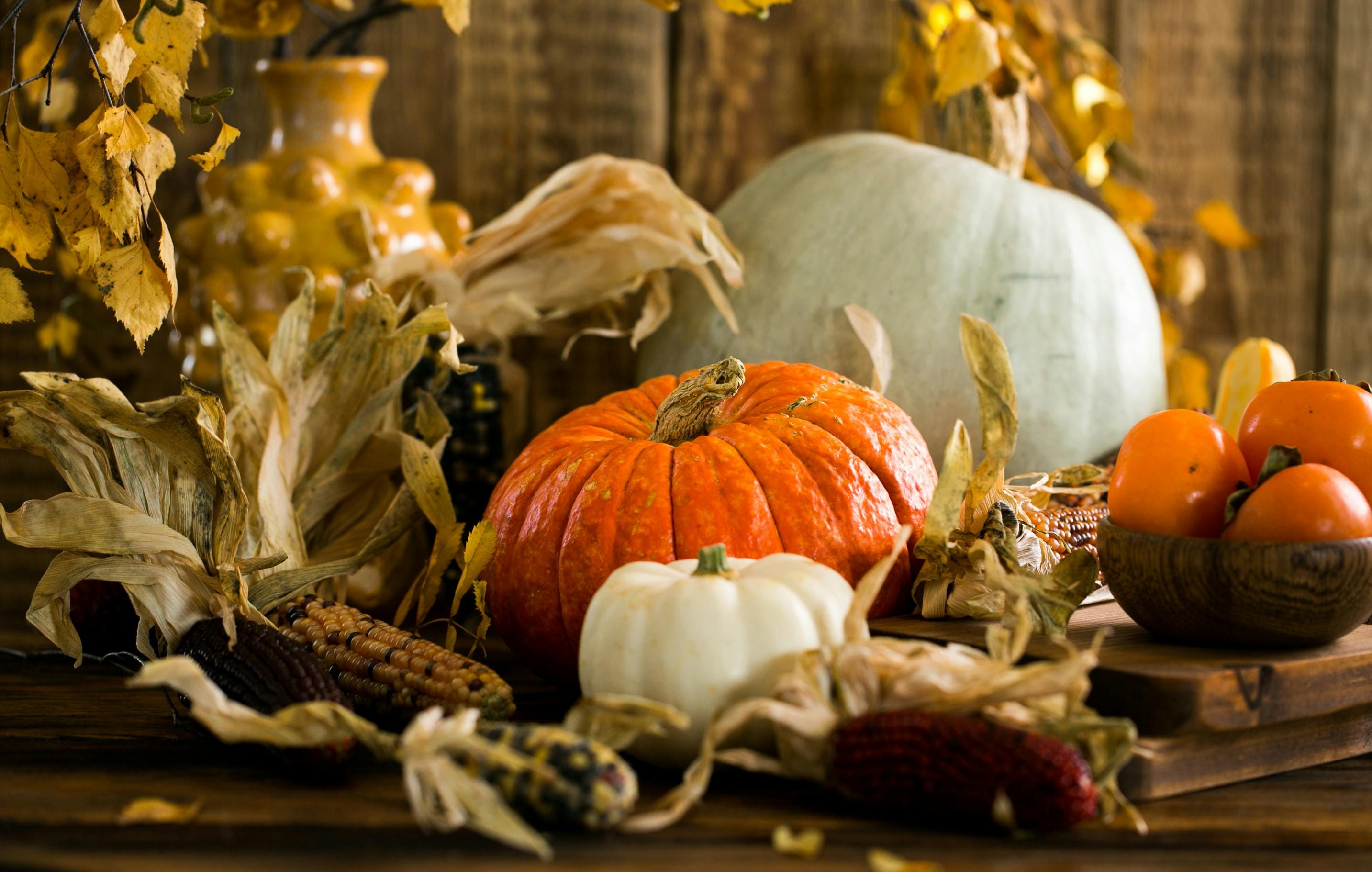
We all begin in the same place: at that quiet moment before everyone arrives, when the house smells like butter and onions and something just starting to brown, and the question sneaks in—what, exactly, are we giving thanks for this year? But this time, imagine that table anchored by two very different loaves of bread: Margaret Carlson’s starter‑fed sourdough on one end, and a simple pan of cornbread or Parker House rolls on the other, the way a good Thanksgiving table holds both the elevated and the everyday, the storied and the humble.
The American Table has always lived in that space between. Over the past year, the stories have ranged from the glittering world of private chefs—designing tasting menus in glass‑walled condos and embassy dining rooms—to the harsh arithmetic of food stamps and the looming expiration of expanded SNAP benefits that threatens to push millions of families deeper into hunger. There were stories about chocolate mousse and Champagne, and there were investigations into how a policy vote in Washington can mean the difference between a full pantry and an empty refrigerator in a town most decision‑makers will never visit.
Threaded through it all were people. A farmer and a migrant worker, searching for hope beyond the nation’s capital while politicians traded talking points. Advocates warning that America is on the brink of the worst food insecurity crisis in generations if it allows SNAP expansions to quietly disappear. Chefs and sommeliers explaining why hospitality still matters when the headlines feel like a slow‑moving storm. And, of course, new voices at this publication—like Margaret Carlson, the trailblazing journalist who has turned her attention here, writing about baking bread in the midst of chaos and proving that a sourdough loaf can be as much a political act as a comfort.
That sourdough is not just a recipe; it is a metaphor for what this year at The American Table has tried to be. Sourdough starts with something small and alive that you have to feed, day after day, when no one is watching, and there is nothing Instagrammable about it. Eventually, and only with care, it becomes a loaf that can anchor a table—a crust that crackles, a crumb that holds. In the same way, building a more just food system starts with quiet, unglamorous work: reading the farm bill fine print, listening to a migrant worker talk about wages, standing up in a church basement or a county meeting room to say, “This is not acceptable,” long before the cameras arrive.
This year, the cameras did arrive in one very specific place: Somerville, Virginia. The film Somerville, released through this platform, told the story of White Ridge Farm and the Grove family’s fight against massive transmission towers that threatened to carve through their land and their sense of home. It was framed as a David and Goliath story because that is exactly what it was: a century‑old Black Angus farm, a family that had worked that soil for more than a hundred years, staring down a multibillion‑dollar energy company.
Somerville is, at its core, a story about refusal—the refusal to accept that rural land, and the people rooted there, are expendable. It is also, now, a story marked by loss. This Thanksgiving, The American Table dedicates this essay, and this holiday, to the memory of Bobby Grove of Somerville, Virginia, whose life and courage are woven through every frame of that film and every acre of White Ridge Farm. Bobby’s battle with cancer, his determination to keep the farm going, and his quiet insistence that this land and this way of life were worth fighting for, gave the country a model of what rootedness looks like in an age obsessed with velocity and profit.
In Bobby’s world, gratitude was not theoretical. It was sunrise over a pasture, calves dropping in a cold spring, neighbors showing up with casseroles when treatments were rough, and his sister—Donna—who kept telling their story even when it would have been easier to grant the interview, sign the papers, and disappear into private grief. To be thankful, for the Groves, was to wake up one more day on the land their family had held for generations and say, “We’re still here.” This piece is for Bobby, for that stubborn “still here,” and for every farm family in America wondering how long they will be able to say it.
If the story stopped there—with lobster and polyester on one end of the holiday spectrum and a farm in a Dominion Energy right‑of‑way on the other—it would be a bleak kind of Thanksgiving. But America has always been a country of “and.” A 70s‑themed Thanksgiving survival guide on this site gave permission to laugh this year—to serve lobster instead of turkey, to cue up disco, to let people wear something outrageous and forget, for one night, about government shutdowns and flight delays. That wasn’t escapism for its own sake; it was a reminder that joy is fuel, not a distraction—that people fighting for land, for justice, for policy change also need to dance, to eat well, to relax into the arms of their own families without doomscrolIing every break in the conversation.
So what is there to be thankful for in America on this Thanksgiving? Start with the obvious: the readers who have turned The American Table into a living, breathing community rather than a lonely website, pushing its audience into the thousands and proving that long‑form writing about food, politics, and rural life still has a home. Be thankful for the legendary journalists like Margaret Carlson and Annie Groer who have chosen to bring their voices and their recipes here, bridging the world of Washington panels and Sunday shows with the alchemy of flour, water, and salt. Be thankful for the chefs and private cooks who have opened up a new frontier of hospitality, showing that luxury can be about care and intention, not just price.
Be thankful, too, for the advocates and policymakers who are still willing to be unpopular in defense of hungry families, who understand that SNAP is not charity but infrastructure, as critical as any bridge or highway. For every teacher who quietly keeps snacks in a desk drawer, every church basement pantry that stretches donations further than seems mathematically possible, every neighbor who drops off a pie or a loaf of bread on a doorstep simply because “it’s been a hard year.” That web of small, local, often invisible acts is the country at its best—messy, improvised, not nearly enough on its own, but undeniably good.
And finally, be thankful for the possibility that runs, like a current, under all of this: the possibility that a story can still change something. Somerville exists because one family said yes to having cameras in their kitchen and their fields, trusting that if people could see what was at stake, they might care enough to act. The SNAP coverage exists because sources shared hard data and harder truths. The lobster-and-polyester piece exists because someone in your life once decided that Thanksgiving could be weird and wonderful and still count. Margaret Carlson’s sourdough exists because she kept feeding a starter when the wider world felt like it was coming apart.
This morning, as ovens click on and someone in your house asks where the roasting pan went, an invitation is embedded in this holiday. Break bread—sourdough, cornbread, Parker House rolls, tortillas, injera, whatever your table looks like—and, in doing so, make a quiet promise: to notice who grew the wheat and who harvested the cranberries, who is being left out of the feast, which farms are being asked to sacrifice their horizons so someone far away can have cheaper power. Raise a glass to the memory of people like Bobby Grove, who showed this country what steadfast love of land and family looks like, and to the living communities still fighting in his name.
And then, after the dishes are stacked and the candles burned low, let this be the year America decides that gratitude is not the end of the story but the beginning—that being thankful for abundance is inseparable from the work of making sure more people share in it. If this table, this newsletter, this little corner of the internet has any mission at all, it is to keep telling the stories that make that work feel not just necessary, but possible.
Thank You!
Beautiful----I loved the entire story. And, masterfully written. Donna