

Breakfast for Twelve, at Dawn
In 1974, a Dying Woman got Candlelight and Oysters at the Reflecting Pool. This year, the Reflecting Pool is the one that’s Sick — and They Fenced it off.

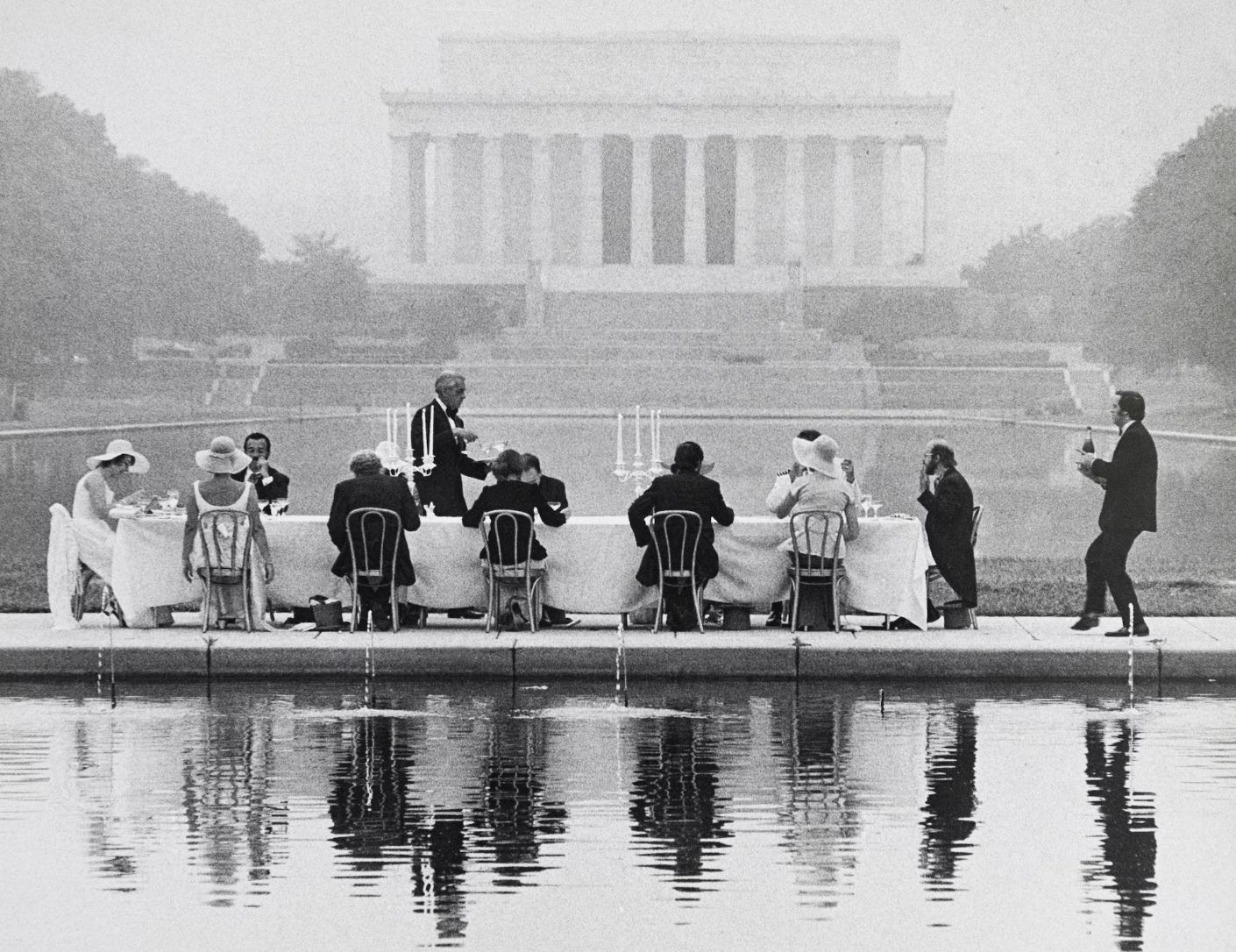
There’s a photograph worth sitting with this week. Twelve people in morning coats and floor-length gowns, seated at a long white table at the edge of the Lincoln Memorial Reflecting Pool. It isn’t quite seven in the morning. A string quartet is playing somewhere off the frame. The candelabra are lit even though the sun is already up. And in the water beneath them the whole improbable scene is doubled — china, champagne, the brims of those enormous hats — because that is exactly what a reflecting pool is for.
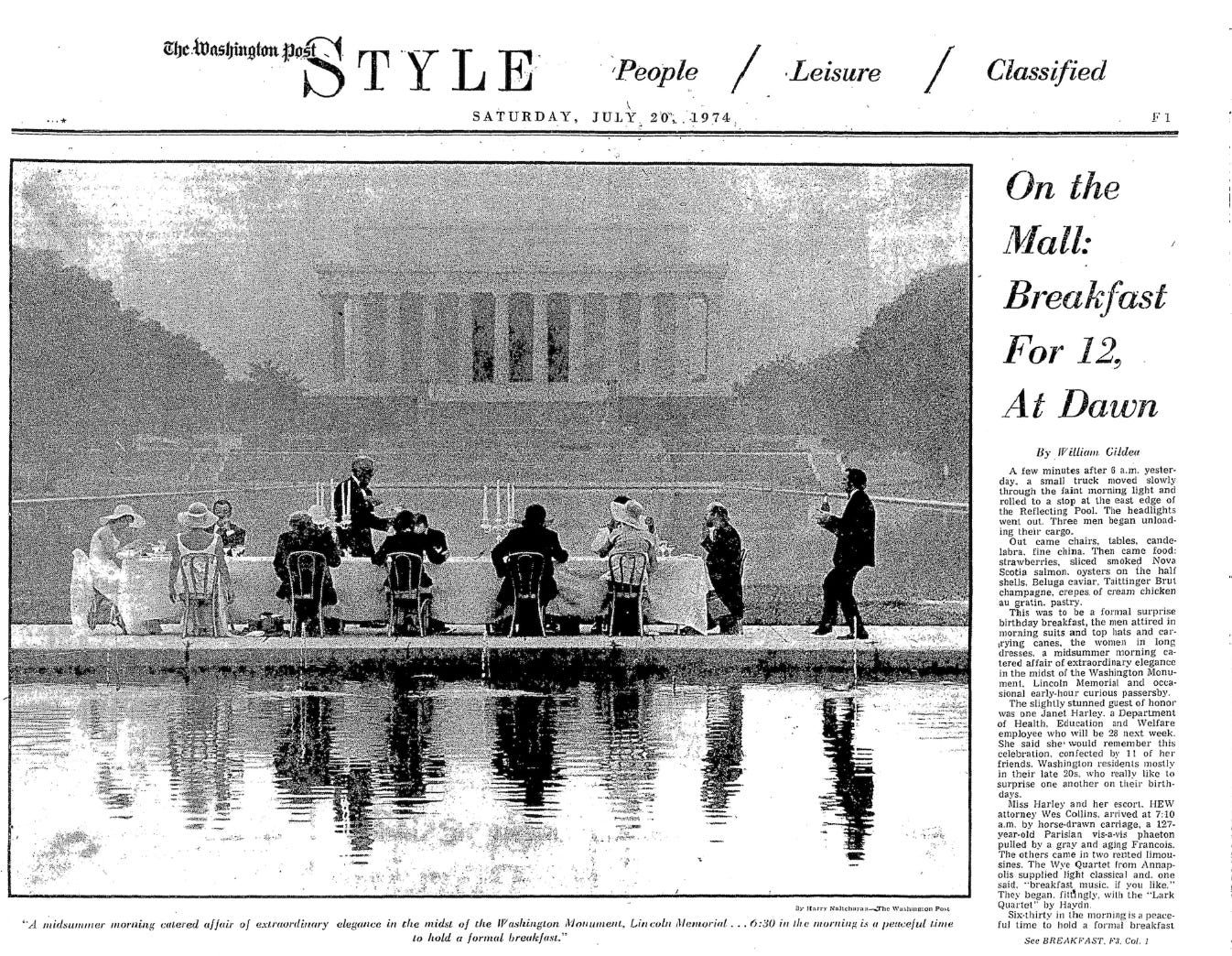
The Washington Post ran it on the front of the Style section on July 20, 1974, under a headline I would have killed to write: “On the Mall: Breakfast for 12, At Dawn.” The photographer was Harry Naltchayan, a Post lifer who shot presidents and moon landings and Dr. King at the microphone. For half a century people bought prints and hung them in offices without knowing the first thing about the diners. They didn’t need to. The picture tells you that someone, once, thought the most beautiful room in Washington was outdoors, at dawn, with no walls.
The woman it was all for, Janet Harley, was twenty-eight and had just been told she had terminal breast cancer. Her friends decided the answer to that news was not a casserole. It was a permit. They walked into a government office and asked, with a straight face, to set a formal breakfast for twelve at the edge of the Reflecting Pool — and they got it, signed and stamped. They woke Janet before dawn, walked her to a horse-drawn carriage, and served her oysters and champagne at first light while strings played behind her
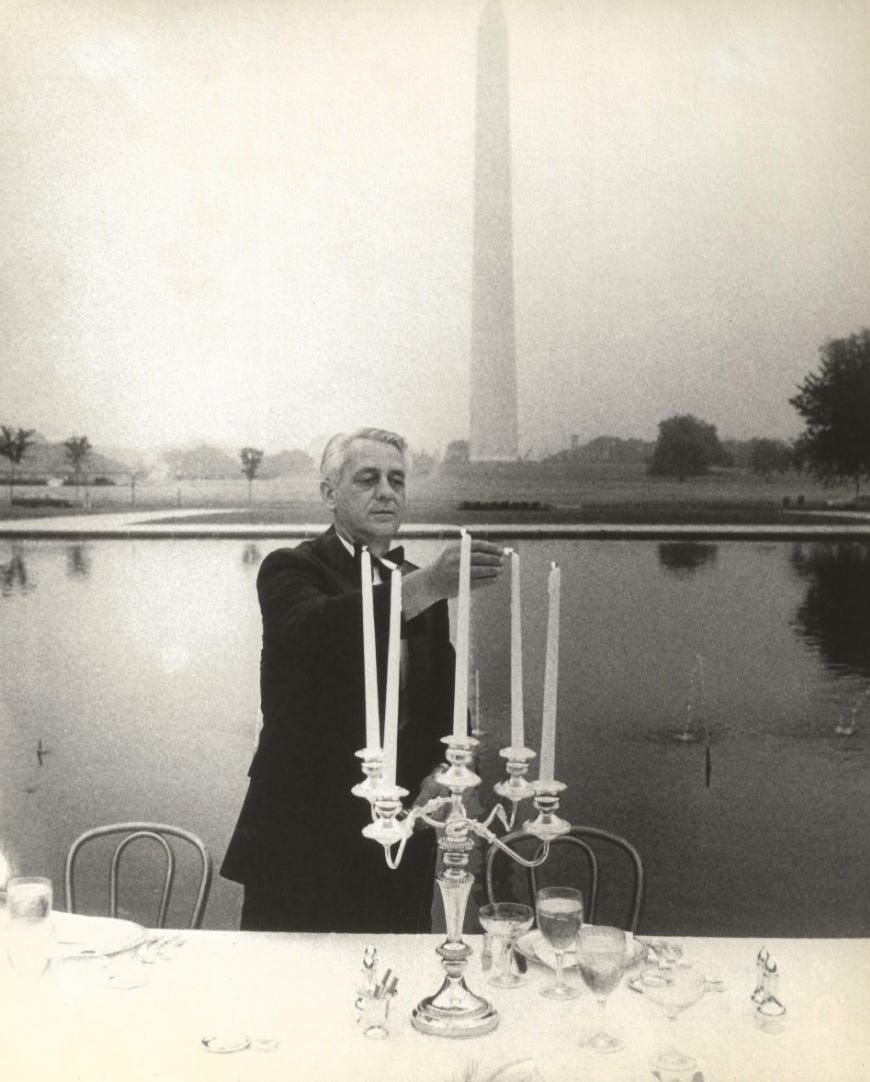
Janet died in 1982, at thirty-five. Before she did, she helped write the government’s guiding interpretation of Title IX — the law that pried the gym doors open for every girl who ever laced up a cleat. In 2024, Naltchayan’s own daughter found the survivors and re-set the table on the fiftieth anniversary, in the same spots. The chair at the head sat empty on purpose. It was Janet’s.
One of them put it best, decades on: it was their way of celebrating being alive, and together.
That’s the part I can’t get out of my head. The worst news a young person can get had just landed in that group, and their answer was to pull the table closer to the thing that scared them — candlelight, oysters, friends, the open Mall at dawn. They met something dying with a feast.
The Reflecting Pool was built in the 1920s to do one job, and the job is in the name. It holds still water between the Lincoln Memorial and the Washington Monument so the two great verticals of the Republic can see themselves, and so we can see them twice. It’s where the 1963 March pooled its quarter-million. It’s where Janet’s friends poured champagne. It is, functionally, the largest mirror in America, and like any good mirror it has never much cared who was standing in front of it. That’s the thing about a reflection — it’s democratic. It gives back whatever you bring.
This spring it was drained and resurfaced and, on a presidential whim, painted “American flag blue.” The bill ran north of sixteen million taxpayer dollars. The blue didn’t last a month. The water went green with algae. The paint began peeling and floating up in sheets. A duckling was found dead in it, and the District opened an investigation into whether the bloom had turned toxic. The mirror stopped reflecting and started rotting, and now it’s to be drained again, around the Fourth, for what they’re calling a “permanent repair.”
Read that back. A young woman, fifty years ago, told her body was failing — and the response at that pool was a banquet. This year the pool itself is failing — sick water, dying paint, a dead duck floating in the blue — and the response is a fence.
Because that’s the other thing that happened this week. Ahead of the Fourth of July — the 250th, the big one — crews ran chain-link around the entire perimeter and mounted cameras over the water’s edge. The official line is that the pool always gets fenced for the holiday, fireworks, public safety, and there’s truth in that. But it went up early, and the reason given wasn’t fireworks. It was people. The President says the new lining was slit three hundred feet, then three hundred and fifty, “in the dark of night.” Arrests were made. So up went the wall.
We looked at something we love coming apart, and we decided the move was to fence it off and point cameras at it. Janet’s friends would not recognize us.
Are you invited?
That’s the whole story, in two questions fifty-two years apart.
In 1974, the question at the edge of that water was are you invited? — and the answer could be yes. Yes for twelve people who simply asked. Yes for a dying woman and her friends who decided grief deserved candlelight on the country’s front lawn. The Mall said come.
In 2026 there’s no question, because the answer’s been settled in advance and bolted into the ground. No permit to request, no table to set, no walking up to see your own face in the water — because the water is the color of a bad hotel pool, and it gives back one man’s idea of red-white-and-blue and nothing past it. Not the Monument, not the Memorial, not you. The same Mall is getting a triumphal arch now, and when a reporter asked the President who the arch was for, the answer was one word: “Me.” —CBS News. There’s your before-and-after. The breakfast was for Janet, a gift the givers stayed out of the frame to give. The arch is for me.-
So here we are. Sixteen million dollars and a fence around our own front lawn, two weeks before the country turns two hundred and fifty. That’s the message now, and it’s a short one. Stay back.
The twelve people in that photograph wanted the opposite thing. They wanted to add a chair, not take the table away. They looked at the most public lawn in America and figured someone they loved should get to eat breakfast on it, even — especially — with the clock running out. That was the whole idea. It isn’t complicated, and it never was.
We knew how to do it once, at dawn, with no walls. We could again. The fence is the easy part to take down.
The American Table runs at the intersection of food, politics, and culture.